Introduction
Most recruitment teams do not have a technology problem. They have a connection problem.
The average talent acquisition function today uses an applicant tracking system, multiple job portals, a sourcing tool, assessment platforms, video interview software, scheduling tools, background verification services, an HRIS, and a collection of spreadsheets that hold everything else together. Each tool solves a specific problem. But when these tools do not talk to each other, recruiters spend hours copying candidate data, chasing updates, and reconciling reports instead of hiring.
A connected hiring technology ecosystem solves this by integrating every recruitment tool, workflow, and data source into one unified system, so information flows automatically from the first job requisition to the candidate's first day. This guide explains what a connected hiring ecosystem is, why it matters, which components it needs, and how to build one step by step.
What Is a Connected Hiring Technology Ecosystem?
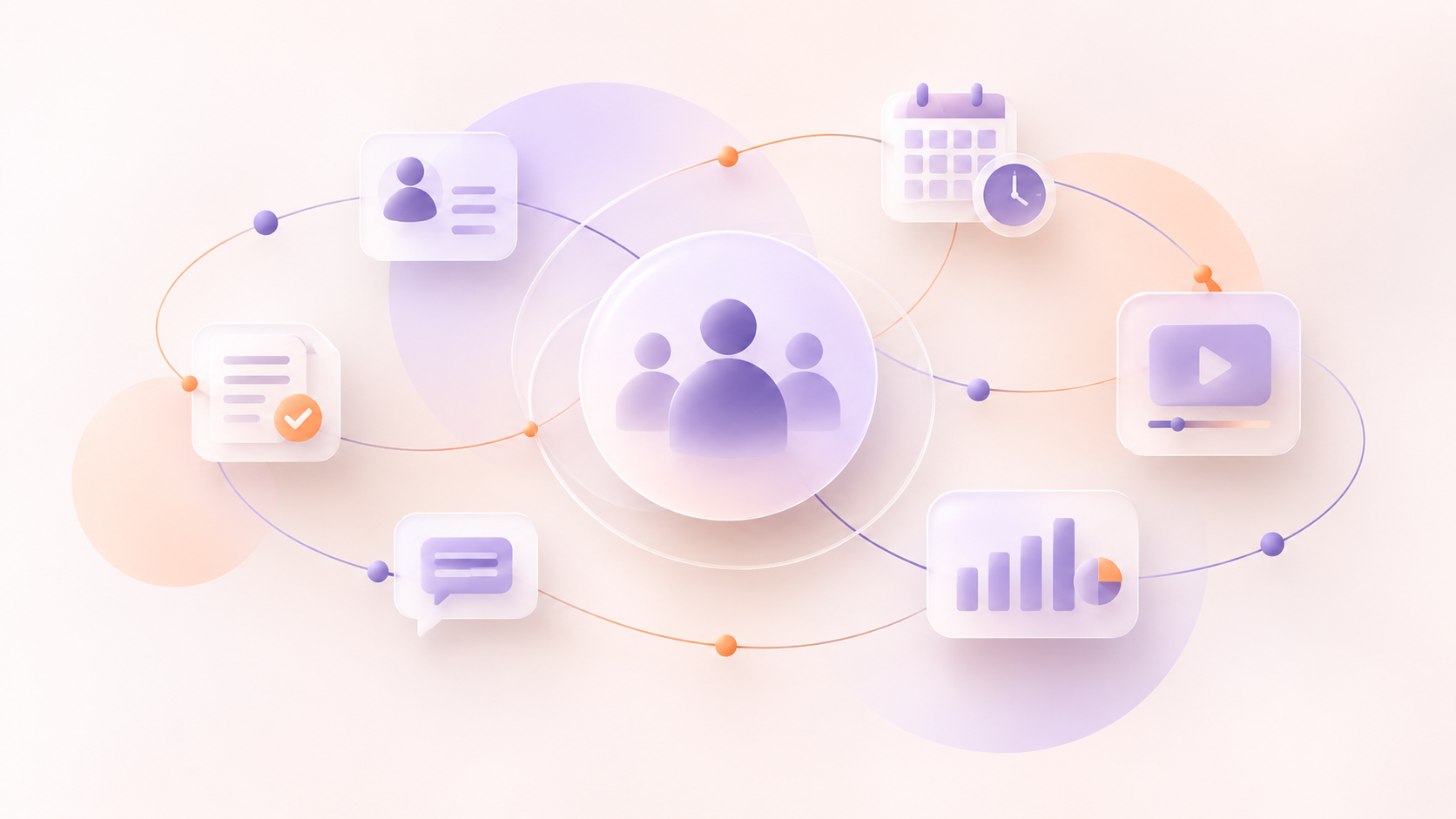
A connected hiring technology ecosystem is a recruitment technology stack in which the applicant tracking system, sourcing tools, assessments, interview platforms, communication channels, analytics, and HR systems are integrated so that candidate data, workflows, and insights move between them automatically.
Instead of operating as isolated applications, each tool becomes part of a single hiring workflow. A candidate who applies through a job portal is automatically parsed, screened, scored, scheduled for an interview, assessed, moved through approvals, and transferred to onboarding, with every interaction recorded in one central candidate profile.
A connected hiring ecosystem typically has four defining characteristics:
- A single source of truth: One central system holds candidate records, job data, and hiring status.
- Two-way integrations: Data flows in both directions between tools, rather than being exported and imported manually.
- Workflow automation: Routine actions such as screening, scheduling, reminders, and status updates are triggered automatically.
- Unified analytics: Recruitment metrics are measured across the entire hiring funnel, not tool by tool.
Why Disconnected Hiring Tools Hold Recruitment Teams Back
Adding more recruitment software does not automatically improve hiring. In many organisations, every new tool adds another login, another data silo, and another manual step. The result is a fragmented hiring stack that slows teams down.
The first casualty is recruiter time. When systems are disconnected, recruiters re-enter candidate details, download and upload resumes, copy interview feedback, and update statuses across multiple platforms. These administrative tasks pull them away from the work that actually moves hiring forward: sourcing, engaging candidates, and advising hiring managers.
Data quality suffers next. The same candidate may exist in a job portal, an assessment tool, an email inbox, and a spreadsheet, each with slightly different information. With duplicate and outdated records scattered across systems, it becomes hard to know which version is accurate, and that uncertainty spills into the candidate experience. Interview invitations are delayed, assessment results sit unreviewed, and applicants wait days for updates. Strong candidates often accept other offers during these gaps.
Leadership feels the impact too. When recruitment data is spread across tools, basic questions such as where candidates drop off, which sources produce the best hires, or why time-to-hire is increasing become difficult to answer. Reports take days to compile and are often outdated by the time they are shared. At the same time, candidate information stored across emails, spreadsheets, and unmanaged tools is harder to protect, making consent, access controls, data retention, and audit trails far more difficult to manage.
Core Components of a Connected Hiring Tech Stack
Every organisation's hiring ecosystem will look slightly different, but the applicant tracking system (ATS) is almost always the foundation. It manages job requisitions, candidate pipelines, hiring workflows, and collaboration between recruiters and hiring managers, and in a connected ecosystem it acts as the central hub that every other tool integrates with.
Around the ATS, most connected recruitment tech stacks include the following components:
- Sourcing and job distribution: Job portals, career sites, referral programmes, and talent databases that push postings out and pull applications back into the ATS automatically.
- AI resume parsing and screening: Tools that extract structured data from resumes and match candidates against job requirements, so high-volume applications can be shortlisted quickly and consistently.
- Candidate engagement: Email, SMS, WhatsApp, chatbots, and voice agents that are triggered by pipeline stages, with every interaction logged on the candidate profile.
- Assessments and interviews: Skills assessments, AI phone screening, video interviews, and scheduling tools whose results, recordings, transcripts, and scorecards flow back into the central record.
- Background verification and offer management: Verification services, offer letter generation, and digital signatures, with approvals routed automatically instead of through long email chains.
- HRIS and onboarding: Systems that receive new-hire data automatically once an offer is accepted, eliminating duplicate entry.
- Recruitment analytics: Dashboards that combine data from every stage to measure time-to-hire, cost-per-hire, source effectiveness, drop-off, and quality of hire.
How to Build a Connected Hiring Technology Ecosystem: A Step-by-Step Framework
Building a connected hiring ecosystem does not require replacing every tool at once. The most successful organisations follow a structured, phased approach.
Step 1: Audit Your Current Recruitment Tech Stack
List every tool your team uses across the hiring lifecycle, including spreadsheets and email-based processes. For each tool, document what it does, who uses it, what data it holds, what it costs, and whether it integrates with your ATS.
Step 2: Map Your End-to-End Hiring Workflow
Document every step from job requisition to onboarding. Identify where data is entered manually, where handovers happen between teams, and where candidates experience the longest delays. These friction points are your priority integration opportunities.
Step 3: Choose a Central System of Record
Select one platform, usually your ATS or an AI-powered hiring platform, to act as the single source of truth for candidate and job data. Every other tool should read from and write to this central system.
Step 4: Prioritise Integrations by Business Impact
Start with integrations that remove the most manual work or the biggest delays, such as job board syndication, resume parsing, interview scheduling, and HRIS handover. Favour tools with open APIs, native integrations, and webhook support.
Step 5: Automate Repetitive Workflows
Once systems are connected, automate routine actions such as screening, candidate acknowledgements, interview reminders, feedback requests, and status updates. Automation should reduce administrative effort while keeping recruiters in control of decisions.
Step 6: Standardise Data and Governance
Define consistent job titles, pipeline stages, rejection reasons, and source tags across all tools. Establish clear rules for data access, consent management, retention, and privacy compliance.
Step 7: Train Teams and Drive Adoption
Technology only delivers value when people use it. Train recruiters, hiring managers, and interviewers on the new workflows, and gather feedback regularly to refine processes.
Step 8: Measure, Optimise, and Scale
Track key metrics before and after integration to measure impact. Use these insights to optimise workflows and decide which tools to integrate, consolidate, or retire next.
The Future of Connected Hiring: AI-Powered, Unified Recruitment
The next generation of hiring ecosystems goes beyond simple integrations. AI is turning connected recruitment stacks into intelligent systems that can understand intent, act across tools, and surface insights proactively.
Instead of recruiters navigating between multiple dashboards, AI-powered hiring platforms allow teams to screen candidates, schedule interviews, conduct AI phone screenings, generate interview summaries, and pull recruitment reports from a single interface, often through simple voice or text commands.
Platforms such as intalent.ai are built around this connected approach, bringing an ATS, AI screening, voice and video interviews, candidate engagement, and recruitment analytics into one agentic hiring operating system. The goal is to give recruiters one connected workspace rather than a collection of disconnected tools.
How to Measure the Success of a Connected Hiring Ecosystem
Organisations can evaluate the impact of a connected hiring ecosystem by tracking:
- Time-to-hire: The number of days from job opening to offer acceptance.
- Recruiter productivity: The number of requisitions or hires managed per recruiter.
- Candidate drop-off rate: The percentage of candidates who exit the process at each stage.
- Cost-per-hire: Total recruitment spend divided by the number of hires.
- Candidate experience scores: Feedback collected from applicants throughout the process.
- Data accuracy: The reduction in duplicate, incomplete, or outdated candidate records.
Key Takeaways
A connected hiring technology ecosystem brings every recruitment tool into one unified workflow with a single source of truth, usually anchored by an ATS or an AI-powered hiring platform. Without that connection, teams face manual work, inconsistent data, slower hiring, and poorer candidate experiences.
The most reliable way to get there is in phases: audit, map, centralise, integrate, automate, govern, train, and measure. And as AI turns these stacks into intelligent systems that act across tools on behalf of recruiters, the advantage of being connected will only grow. Better hiring does not come from adding more tools. It comes from connecting the right ones.
Frequently Asked Questions (FAQs)
1. What is a connected hiring technology ecosystem?
A connected hiring technology ecosystem is an integrated recruitment tech stack in which the ATS, sourcing tools, assessments, interview platforms, communication channels, HR systems, and analytics share data and workflows automatically. It gives recruitment teams a single source of truth and an end-to-end view of the hiring process.
2. Why is an integrated recruitment tech stack important?
An integrated recruitment tech stack reduces manual data entry, improves data accuracy, speeds up hiring, improves candidate experience, and provides complete visibility into recruitment performance. It allows recruiters to focus on people rather than administration.
3. What tools should be part of a hiring technology ecosystem?
Most hiring technology ecosystems include an applicant tracking system, job distribution and sourcing tools, AI resume parsing and screening, candidate communication tools, assessments, interview and scheduling software, background verification, offer management, an HRIS, and recruitment analytics.
4. What is the role of an ATS in a connected hiring ecosystem?
The ATS acts as the central hub and system of record. It stores candidate and job data, manages hiring workflows, and integrates with every other recruitment tool so that information flows into and out of one central platform.
5. How does AI improve a connected hiring ecosystem?
AI automates repetitive tasks such as resume screening, interview scheduling, phone screening, and interview summaries. It also analyses data across the hiring funnel to surface insights, allowing recruiters to make faster and better-informed decisions.
6. How long does it take to build a connected hiring ecosystem?
Timelines vary based on the size of the organisation and the number of tools involved. Many organisations see early results within a few weeks by integrating high-impact workflows first, then expanding the ecosystem in phases over several months.
7. Is a connected hiring ecosystem suitable for small and mid-sized businesses?
Yes. Small and mid-sized businesses often benefit the most because they have smaller recruitment teams. An all-in-one AI hiring platform can provide a connected ecosystem without the cost and complexity of integrating many separate tools.