.svg)
Back to blogs
Why Traditional Hiring Models Are Losing Relevance
Hiring is evolving beyond manual processes and disconnected tools. Explore why AI-powered recruitment and automation are becoming essential for modern hiring teams.
Back to blogs
Hiring is evolving beyond manual processes and disconnected tools. Explore why AI-powered recruitment and automation are becoming essential for modern hiring teams.
.png)
September 22, 2026
.svg)


Hiring has changed significantly over the last few years. Candidates expect faster communication, simpler application processes, and a more personalized experience, while hiring teams are expected to identify the right talent faster and manage increasing volumes of candidate data.
Yet many organizations still rely on hiring processes built around manual screening, repetitive coordination, spreadsheets, disconnected tools, and lengthy approval cycles.
Traditional hiring models were not designed to handle today's pace of recruitment.
The issue is not that traditional hiring practices stopped working. The issue is that the hiring environment has changed, while many recruitment processes have remained the same.
AI-powered recruitment, automation, skills-based hiring, and recruitment analytics are changing how organizations attract, assess, engage, and hire talent. As these technologies become more accessible, companies are beginning to rethink what a modern hiring process should look like.
For decades, recruitment has depended heavily on human effort. Recruiters review resumes, shortlist candidates, write job descriptions, coordinate interviews, communicate with applicants, update candidate records, and prepare reports.
Individually, these tasks may not seem particularly difficult. The challenge appears when recruiters have to perform them repeatedly across hundreds or thousands of candidates.
As hiring volumes increase, administrative work can take up a significant part of a recruiter's day. Instead of spending more time understanding candidates and working with hiring managers, recruiters can end up managing spreadsheets, sending follow-ups, scheduling interviews, and updating systems.
This creates a fundamental problem with traditional hiring models: scaling recruitment often means increasing the amount of manual work.
Technology changes that equation.
Automation can take over repetitive processes while recruiters remain responsible for the decisions that require human judgment. This allows recruitment teams to spend less time managing processes and more time engaging with candidates, understanding hiring requirements, and building relationships.
The objective is not to remove people from recruitment. It is to remove unnecessary work from their day.
The hiring process is also a candidate experience.
Candidates evaluate an organization through every interaction they have with it, from the first application to interview communication and final feedback.
A candidate who applies for a role may have to wait days before receiving a response. After being shortlisted, they may wait again for an interview to be scheduled. Following the interview, they may have no visibility into what happens next.
These delays can make an otherwise strong opportunity feel frustrating.
Traditional hiring processes often depend on someone manually moving the candidate from one stage to another. When recruiters are managing multiple roles and large candidate pipelines, even small delays can add up.
Modern recruitment technology can help remove some of this friction. Automated communication, interview scheduling, candidate updates, and AI-powered workflows can keep the process moving without requiring recruiters to manually manage every interaction.
This does not mean that every part of recruitment should be automated.
Human conversations, meaningful feedback, and important hiring decisions still require people. The goal is to ensure that candidates are not waiting for a human to complete a task that technology can handle in seconds.
A modern hiring experience should be faster without becoming impersonal.
Applicant tracking systems have been an important part of recruitment for years. They help companies organize applications, track candidates, manage hiring stages, and maintain recruitment records.
But hiring has become more complex than simply tracking applicants.
Recruitment teams now need to source candidates, understand skills, assess applicants, communicate with candidates, conduct interviews, analyze hiring performance, and provide hiring managers with useful insights.
This creates a difference between tracking recruitment activity and understanding recruitment performance.
An ATS may show where a candidate is in the hiring pipeline. A more intelligent recruitment platform can help answer questions about why candidates are moving through the pipeline, where they are dropping off, which skills are difficult to find, which sourcing channels are producing relevant candidates, and how long different stages of the process are taking.
This shift is important because recruitment data is no longer just something to store.
It can become a source of intelligence.
Instead of manually collecting information from different systems and spreadsheets, hiring teams can use connected technology to bring information together and turn it into actionable insights.
The future of recruitment is therefore moving beyond simply tracking candidates. It is about understanding the entire hiring process.
Artificial intelligence is becoming a significant part of modern recruitment because it can support multiple stages of the hiring lifecycle.
AI can help create job descriptions, identify relevant candidates, analyze resumes, communicate with applicants, conduct interviews, generate interview summaries, and surface recruitment insights.
The bigger change, however, comes when these capabilities work together.
Consider a recruiter who needs to find candidates with specific experience. Instead of manually searching through hundreds of profiles, an AI-powered system can help identify candidates based on the skills and requirements of the role.
The same recruiter could then use technology to communicate with shortlisted candidates, schedule interviews, conduct structured assessments, generate interview summaries, and organize feedback.
This creates a connected workflow rather than a collection of separate recruitment tasks.
AI can also change how recruiters interact with recruitment software itself. Instead of navigating multiple screens and filters, recruiters can increasingly use natural language or voice commands to perform actions.
A recruiter could ask, "Show me candidates with three or more years of fintech experience," or "Schedule interviews with the shortlisted candidates."
The technology handles the underlying workflow while the recruiter focuses on the outcome.
This is an important shift in recruitment technology. Software is becoming less about making recruiters operate more systems and more about helping them complete work with less effort.
Traditional hiring models are not going to disappear overnight. Recruiters, hiring managers, interviews, conversations, and human decision-making will continue to be essential parts of recruitment.
What is changing is the amount of manual work required to make these activities happen.
The modern hiring model is moving toward a combination of automation, intelligence, and human judgment.
Automation can handle repetitive processes. AI can help recruiters work with large amounts of information and identify patterns. Human teams can focus on understanding candidates, building relationships, evaluating context, and making important hiring decisions.
This creates a more balanced approach to recruitment.
Technology handles the repetitive work that slows teams down, while people remain involved where human judgment matters most.
For organizations, this can also change how recruitment scales. Instead of simply adding more people to manage increasing administrative work, companies can improve the underlying hiring workflow and automate processes that do not require constant human intervention.
The result is not necessarily a completely automated hiring process.
It is a more intelligent one.
Traditional hiring models are losing relevance because they were built around a slower and more manual recruitment environment.
Today's organizations operate in a market where candidate expectations are changing, hiring teams are managing more information, and businesses need to make recruitment decisions faster.
At the same time, AI and automation can now perform many tasks that previously required manual effort.
This creates a new question for hiring teams.
Instead of asking how many people are needed to manage a growing recruitment workload, organizations can ask how much of that workload can be automated.
That shift changes the role of recruitment technology.
The purpose of technology is no longer simply to store candidate information or move applications from one stage to another. It is becoming a way to make the entire hiring process more efficient and intelligent.
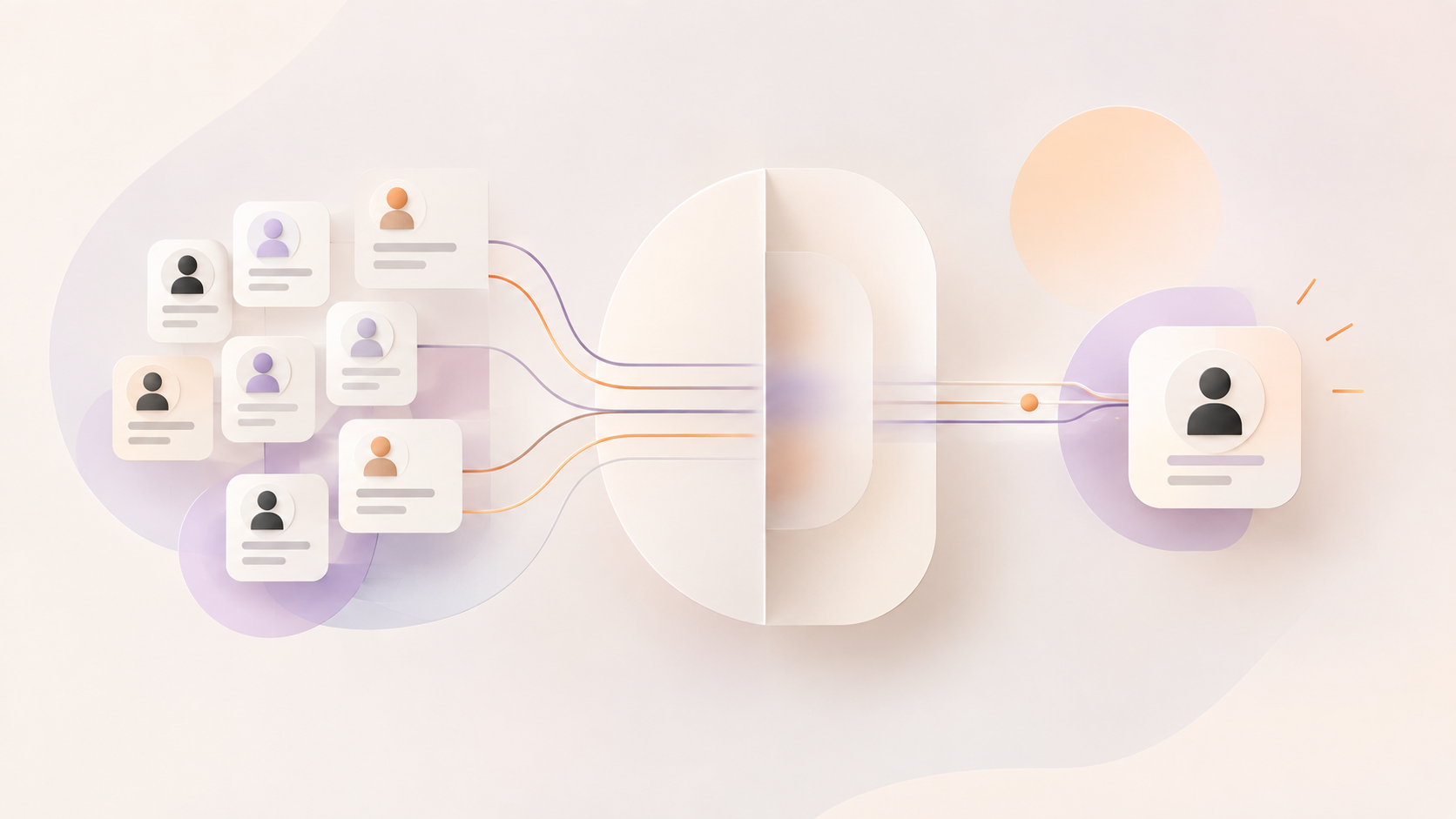
The evolution of recruitment can be understood as a shift from individual tasks to connected workflows.
Traditional recruitment often looks like a series of separate activities: sourcing candidates, screening resumes, scheduling interviews, conducting assessments, collecting feedback, and making hiring decisions.
Modern recruitment technology can connect these activities.
Candidate information can move between stages without being repeatedly entered. AI can support screening and assessment. Automated workflows can keep candidates engaged. Interview information can be summarized and organized automatically. Recruitment data can be analyzed to identify trends and opportunities for improvement.
This allows recruiters to spend less time managing the mechanics of recruitment and more time focusing on the people involved in it.
That distinction matters.
The future of hiring is not about removing recruiters from the process. It is about redesigning the process around them.
A modern hiring model is built around speed, intelligence, automation, and human judgment.
It should make it easier for organizations to identify relevant talent based on skills and experience, communicate with candidates throughout the hiring process, assess candidates consistently, and understand what is happening across the recruitment pipeline.
It should also give recruiters and hiring managers access to useful insights without requiring them to manually collect and organize information from multiple sources.
Most importantly, technology should support the people making hiring decisions rather than make the process feel completely automated.
The strongest recruitment technology does not make hiring less human.
It removes the repetitive work that prevents recruiters from being more human.
Traditional hiring models rely heavily on manual recruitment activities such as resume screening, candidate communication, interview scheduling, candidate tracking, and recruitment reporting.
Traditional hiring models can become difficult to scale because they depend heavily on manual work. As organizations manage larger candidate pipelines and candidates expect faster communication, manual processes can create delays and inefficiencies.
AI is helping organizations automate and improve different parts of recruitment, including resume screening, candidate matching, job description creation, candidate engagement, interviewing, interview summaries, and recruitment analytics.
AI can automate repetitive recruitment tasks, but recruiters continue to play an important role in candidate relationships, evaluation, communication, and hiring decisions. The focus is increasingly on using AI to support recruiters rather than replacing human judgment.
Intelligent recruitment uses AI, automation, recruitment data, and connected workflows to make the hiring process more efficient and informed across the recruitment lifecycle.
An ATS primarily helps organizations track and manage candidates throughout the hiring pipeline. An AI-powered recruitment platform can go further by supporting sourcing, screening, engagement, interviewing, analytics, and automation across different stages of recruitment.
Traditional hiring models were designed for a recruitment environment where manual processes were necessary.
That environment is changing.
AI, automation, skills-based hiring, recruitment analytics, and intelligent workflows are giving organizations new ways to approach talent acquisition.
The goal is not to make hiring less human.
It is to remove the repetitive work that prevents recruiters from focusing on people.
As recruitment continues to evolve, organizations will increasingly need hiring processes that can move faster, work with more intelligence, and scale without adding unnecessary administrative work.
The future of hiring is not simply about hiring faster.
It is about building a smarter hiring process from end to end.
September 22, 2026
intalent.ai